
Preventive Care for Your Business
You Treat Every Asset You Own With Preventive Care. Except the One That Funds All the Others.
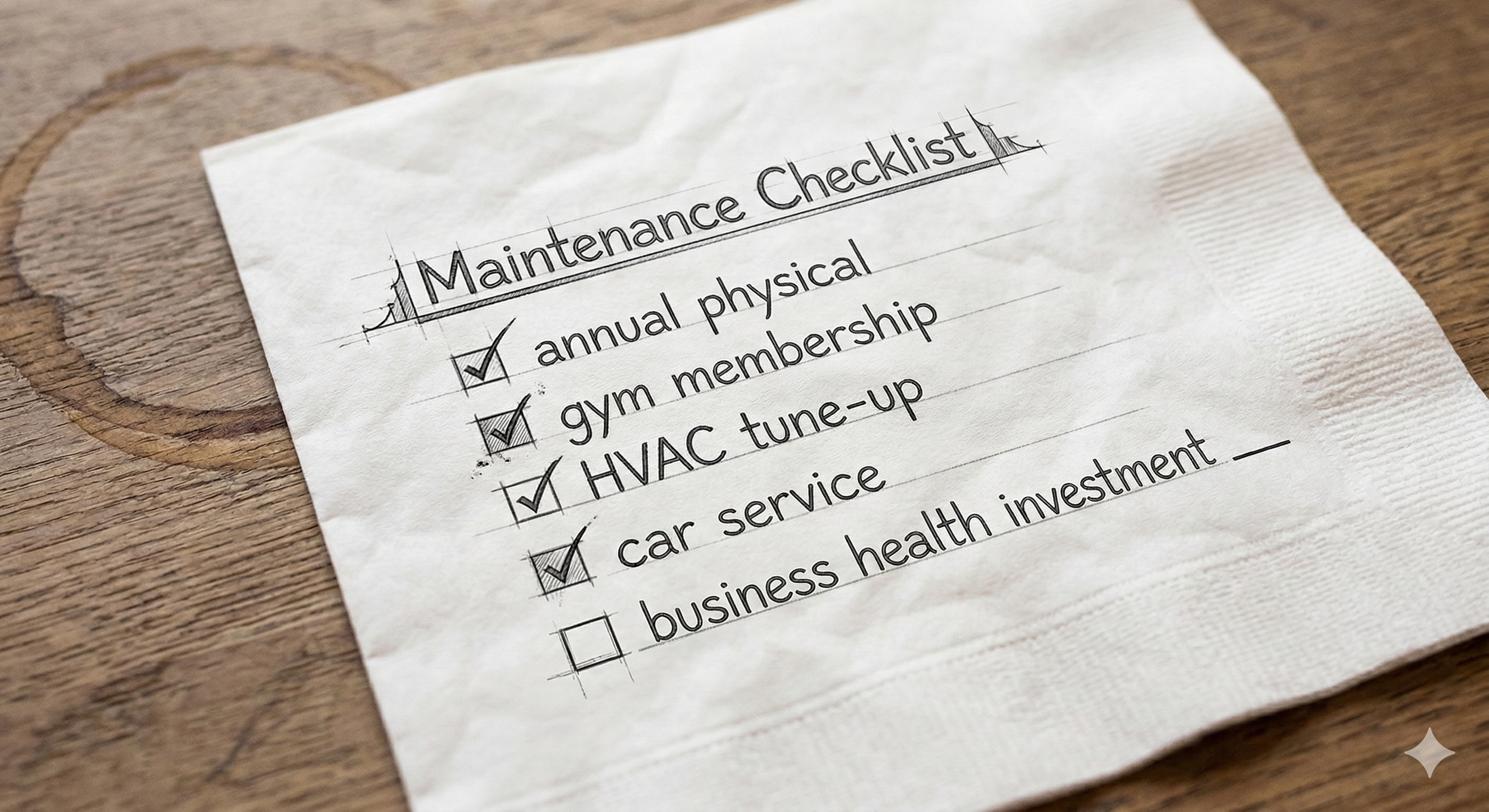
Every time someone talks about investing in your business infrastructure, they frame it as exit planning.
Build your systems so you can sell. Document your processes so a buyer can value them. Develop your team so the business transfers cleanly.
It's not wrong. It's just wildly incomplete.
And for the founder who isn't thinking about exit (and who is, frankly, exhausted by the conversation) it makes the whole thing feel irrelevant.
So let's set exit aside entirely.
Here's the real reason organizational health matters: it's the only thing that gives you a choice about anything.
What It Actually Means to Be Cornered
Professional services founders are among the most capable people in any market. Smart. Driven. Trusted by the clients who pay premium fees for their judgment.
And a staggering number of them are cornered. Not failing. Not struggling. Cornered.
Cornered means you can't say yes to the acquisition you've been circling because you can't step back from operations long enough to evaluate it.
Cornered means you can't take a real sabbatical because three client relationships hinge on your personal involvement and you know it.
Cornered means you can't hire the senior leader who'd actually transform the firm because you haven't built the authority structures that would let them function.
Cornered means when your body starts sending signals (and it will) you can't slow down without the whole thing slowing down with you.
Cornered means the business you built to create freedom has become the thing that makes freedom impossible.
That's not an exit problem. That's a right-now problem.
And here's the part that makes it so persistent: being cornered doesn't feel like a problem. It feels like being good at your job. Every founder who carries the business carries it because they're genuinely the best person in the room for most of what lands on their desk. Their judgment is sharper. Their client relationships are deeper. Their instincts are more reliable.
So being the one who carries everything isn't just a structural reality. It's an identity. And the business reinforces that identity every single day. Your team defers to you because the structure requires it. Your clients want you because the business was built around you. And over time, the line between "the business needs me" and "this is who I am" disappears completely.
That's the two-sided coin of founder dependency. On one side, the business was designed to run through you. On the other, you can't imagine it any other way.
Until someone addresses both sides, nothing changes.
Organizational Health Is the Antidote to Being Cornered
Real organizational health is the systematic construction of a business that doesn't require you to function.
Not a business that performs well when you're present. Every founder has that.
A business that performs when you're not watching. When you're sick. When you're chasing something new. When you're simply done for the day at 3pm on a Friday and you don't feel guilty about it.
That's built through four specific types of intangible capital:
Human Capital: the capability of your team to lead, decide, and deliver without your involvement.
Structural Capital: the systems and accountability structures that produce consistent results regardless of who's executing.
Customer Capital: client loyalty tied to the firm, not to your personal relationships.
Brand Capital: market positioning that generates the right opportunities whether or not you're the visible face.
Most founders have spent years building revenue without building any of these four things deliberately. They've built human capital around themselves. Structural capital in their heads. Customer capital in their contacts. Brand capital in their name.
The business performs. The founder pays for it with their freedom. And because performing-while-carrying-everything feels like competence, not a problem, the pattern can run for a decade before anyone names it.
The 1-3% Principle
Firms serious about organizational health budget for it. Specifically: 1-3% of top-line revenue annually, treated as capital investment, not an expense.
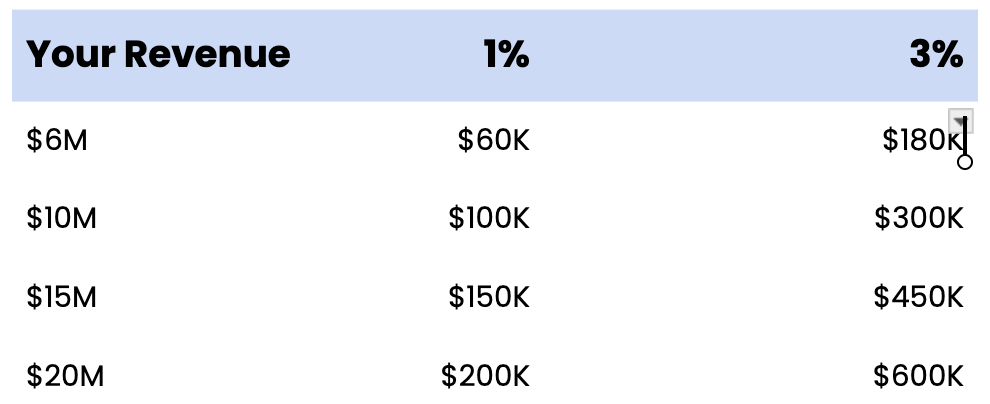
Before you object to those numbers, look at what you've already spent that produced none of these assets:
The coaching engagement that told you to let go and delegate but never rebuilt the structure that made letting go impossible. It addressed the identity side of the coin without touching the structure.
The EOS implementation that organized the bottleneck instead of eliminating it. It addressed the structure without ever confronting why you kept pulling decisions back to your desk. That's the identity side, and EOS doesn't have a playbook for it.
The operations hire who couldn't hold authority because the structure was never redesigned to let them, and because part of you couldn't imagine someone else holding what you've always held.
You've been investing. Just never in something that addressed both sides of the coin at the same time. That's why it didn't stick.
The 1-3% is different. You're not buying a service. You're building assets. The kind of assets that compound, that transfer, that work whether or not you're in the room.
What the Investment Buys (And It's Not Just Valuation)
Yes, organizationally healthy firms sell at dramatically higher multiples. Founder-dependent firms typically sell at 1-2x EBITDA. Firms with genuine intangible capital built in sell at 3-5x or higher. On a $10M firm, that gap can exceed $6 million.
But that's the last chapter of the story. Here's what happens in the chapters before it:
You get to say yes. The acquisition, the partnership, the new market? These opportunities arrive constantly for founders at your level. Organizational health is what lets you pursue them instead of watching them pass because you're too operationally entangled to move.
Your best people stay. High performers leave founder-dependent firms not because of compensation but because capable people need to own outcomes. When you build authority structures that give your team genuine ownership, you stop losing the people you can least afford to lose.
Your firm survives disruption. Not if something disrupts your ability to be present but when. Health issues. Family demands. Market shifts. Burnout. The question isn't whether disruption comes. The question is whether your firm can absorb it or whether it unravels when you're not standing at the center.
You stop paying the hidden tax. Every decision that requires you. Every client escalation that lands on your desk. Every hire that never quite holds authority. Every weekend that belongs to the business. This is a tax founders in organizationally healthy firms don't pay. It's not a motivation problem or a delegation problem. It's a design problem, and it compounds every year you don't fix it.
You get to choose what's next. Not from desperation. Not on someone else's timeline. From a position of genuine optionality. Which is just a sophisticated way of saying: nobody has you cornered.

Why This Category Stays Invisible
Here's the honest answer for why this investment doesn't exist on most P&Ls:
The business doesn't let you think about it. Every day fills with things only you can do because you haven't built the systems that would let someone else do them. You haven't built those systems because every day fills with things only you can do. The trap sustains itself.
It has no natural home. Organizational health has no line item on a P&L. There's no budget category that says "building the business that doesn't need me." When it competes for budget against everything else (which has a name, a vendor, a measurable output) it loses every time.
The results feel intangible until they aren't. You can't point to organizational health the way you can point to new software or a marketing campaign. The results are structural. They accumulate over months in metrics like decision velocity, client retention that survives your absence, and team performance when you're not watching. Founders who think in quarters miss returns that compound in years.
And the hardest reason: being needed feels good. Being the one your team relies on, the one your clients trust, the one who always knows the answer. That's not just a structural dependency. It's an identity. Investing in organizational health means building a business that doesn't need you the way it needs you now. And for the founder whose sense of self is woven into being the one who carries everything, that can feel less like freedom and more like loss.
It isn't loss. It's the upgrade from being valuable because you're present to being valuable because of what you built. But you have to be willing to see it that way.
Ready for Anything. Pressured by Nothing.
That's the actual goal.
Not exit-ready. Not sale-ready. Not even succession-ready (though all of those become dramatically easier).
Ready for anything the market throws at you, because the business is designed to absorb it.
Pressured by nothing, because no single relationship, no single dependency, no single crisis has the leverage to corner you.
That's not a retirement plan. That's how you want to run the business right now, whether "right now" is three years from an exit, ten years from one, or never.
The founders who build this kind of firm don't look back and say "I should have waited longer to invest in organizational health."
They look back and wonder why it took them so long to name it in the budget. What's on yours?